Prayer to St. Thomas More

ST. THOMAS MORE,

counsellor and advocate, learned in the law, chancellor of charity and jurist of justice, merry martyr, scholar and canonized saint, may the Lord of all law and of all lawyers make me at your request a little more like you today than I was yesterday.

PRAY that for the greater glory of God and in pursuit of His justice, I may be able in argument, accurate in analysis, strict in study, correct in conclusion, candid with clients, honest with adversaries, faithful in all details to the faith. Sit with me at my desk and listen with me to my client’s tales. Read with me in my library and stand beside me in court so that today I shall not, to win a point, lose my soul.

PRAY that my spouse and children may find in me what they have a right there to see – honour and humility, cheerfulness and charity, an approach to wisdom, counsel, sound consolation, and a little bit of the shadow of you.

ST. THOMAS MORE, brother lawyer who by your membership has proven our sullied profession not only honourable but also compatible with sanctity, pray for us now engaged in the struggle to imitate our Divine Master.

LORD CHANCELLOR, stand retained by us before the Infinite Lord Justice who will preside when we are to be tried.

AMEN.

TCL Black Cross Logo v2

(Source: St. Thomas More Lawyers’ Guild of Northen Alberta)

Misleading and Deceptive Conduct – Tips for the Merchants

In recent years, small and large businesses have encountered allegations of misleading and deceptive conduct. In Australia, this is governed by the Australian Consumer Law (“ACL”), which serves to provides penalties and to discourage such acts. This blog is to help business owners get a sense of what constitutes misleading and deceptive conduct.

The relevant section regulating misleading and deceptive conduct in the ACL is found in Section 18:

A person must not, in trade or commerce, engage in conduct that is misleading or deceptive or is likely to mislead or deceive.

When does misleading and deceptive conduct occur?

To determine whether misleading and deceptive conduct has occurred, the facts and circumstances of the case will be taken into consideration. This is determined through an objective test, which asks the question – would a reasonable person in the same facts and circumstances have been misled or deceived? A ‘reasonable person’ will match the profile and class of customer that you would ordinarily target with your business. It is also crucial to note that it is irrelevant to determine whether a person was actually deceived.

What kind of conduct would be considered?

Conduct can be in the form of statements made, representations or even silence.

Making statements

When making statements and representations during the course of conducting business, common sense would dictate that you should not deliberately make any misleading or false statements. However, where you make a false statement and are unaware it is false, a court will determine whether you had reasonable grounds to believe the falsity. The trickier aspect of making statements is the ease at which statements can have multiple interpretations and meanings. If one interpretation of a statement could be considered misleading, the entire statement itself will be considered misleading.

To prevent this, it is crucial to ensure that you make clear and concise statements instead of broad general statements. This does not mean you are not allowed to embellish or add ‘puffery’ to your statements (e.g. “we make the best burgers in the world!”) – the courts have recognised that the public is accustomed to such statements and will not take them at face value. There is also the expectation that a reasonable consumer will take more care when making more significant purchasing decisions.

Silence

Silence can be considered misleading or deceptive where it misleads a consumer to believe an untrue state of facts. The most common example of silence is the omission of a crucial fact – where if the consumer had known of the fact earlier, they would not have entered into the transaction.

However, there are exceptions to this principle. In Swindells v Victoria, the Victorian government did not disclose the fact that a particular job advertised could be subject to review and abolished. In this case, the unfortunate plaintiff had moved his family from Western Australia to Victoria for a government role, which was abolished after a review. The court found that the government was under no obligation to disclose the possibility of abolishing the role, as a review could have many possible outcomes and that the abolition of the role was a sophisticated process (it required passing legislation) – which was something the unfortunate plaintiff could have known.

What are the consequences of misleading and deceptive conduct?

There are three consequences that can arise from a claim against misleading and deceptive conduct: damages; compensatory orders; or an injunction.

Damages – a party may seek damages for misleading and deceptive conduct, provided they can prove that they have suffered a loss or damage as a result of relying on it.

Compensatory orders – a party may seek a compensatory order from the court, if they have suffered or are likely to suffer loss or damage arising from misleading and deceptive conduct. The court may order compensation for a full or partial amount of the loss or damage.

Injunction – a party may seek an injunction against somebody who has committed a misleading or deceptive act. An injunction means that the person accused will not be allowed to do certain things. This injunction may also be sought against somebody who is aiding somebody else in committing misleading and deceptive conduct.

If you have any queries, please do not hesitate to contact us.

(Posted by Jeremy Chow, Articled Clerk – This message cannot be used as legal advice).

已离婚的配偶能强分我的遗产吗?

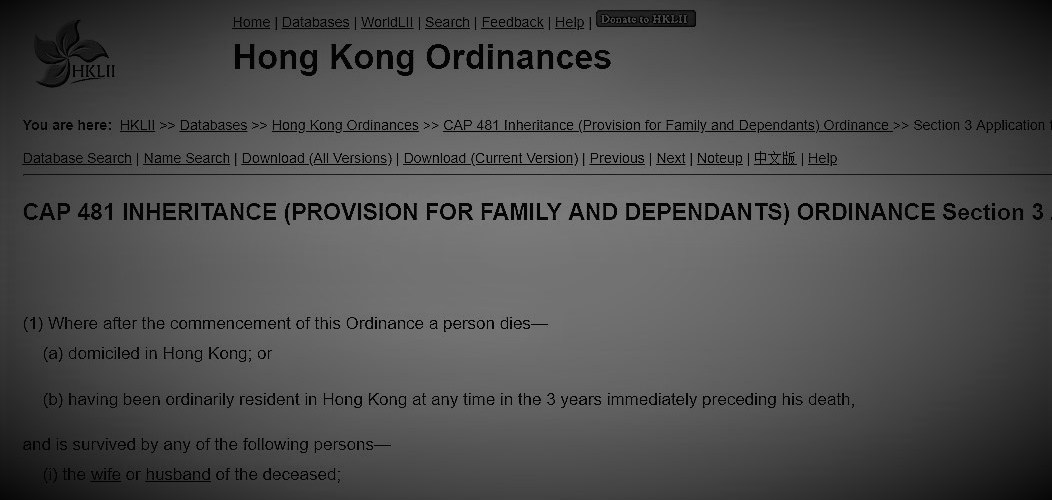
在澳洲和一些普通法地区(包括香港),个人有很大的自由度,透过遗嘱,去分配和处理自己的遗产。然而,这个自由度并不是绝对的。在这些地区,如果死者没有为他或她的特定亲属或生前所供养的人,在遗嘱里安排足够的经济支援,以维持他们(受养人)在死者过身之後的生活,那麽受养人便可以跟据相关法例(例如:新州《继承法条例》里面第三章的规定 – Chapter 3, Succession Act 2006 (NSW) 或香港法例第481章 《财产继承(供养遗属及受养人)条例》的规定)向法庭要求,从死者的遗产中,拨出一个适当的份额,以作为受养人日後的经济支援。对于没有订立遗嘱的人,受养人同样可以根据些这法例,向死者的遗产管理人,提出受养人要求。

一般来说,有权提出受养人要求的人需要和死者有婚姻,伴侣或亲属关系。然而,已办妥离婚手续和财产分配的人,有权提出受养人要求吗?至少在新南威尔士州,答案是可以的,但会有一定难度。

Lodin -v- Lodin [2017] NSWCA 327这个案例里面,死者的妻子在死者过身之前二十年,已和死者办妥离婚和财产分配手续。他们育有一位女儿。在这二十年间,死者并没有为前妻再提供任何经济支援, 但死者有为女儿, 定期提供超过要求的赡养费。在离婚之後,这位前妻不断地滋扰死者。由于死者没有订立遗嘱,根据无遗嘱继承法 (The rules of intestacy),他全部价值五百万澳元的遗产,尽归他的女儿。死者过身之後, 前妻向新南威尔士州高等法院入禀,要求从死者的遗产之中,拿出一部分作为她的经济支援,她的女儿反对。案件於初审时,前妻胜诉并从死者的遗产中获得七十五万澳元。女儿不服上诉。新南威尔士州上诉法庭,推翻初审判决,判前妻败诉。上诉庭所持的其中一个观点,就是死者和前妻已於二十年前处理好一切有关财务的问题。一般来说,死者已再没有道德上的责任,为前妻提供任何经济支援。然而,上诉庭也提到,在某些例外的情况下,即使已离异的配偶,依然可以提出受养人要求。

这个个案,反映出有关法律在执行上的”危”和”机”。

如个阁下对这方面的法律有任何问题,欢迎向本行查询。

(陶建文律师撰写 – 本信息不能用作为法律意见。)

已離婚的配偶能強分我的遺產嗎?

在澳洲和一些普通法地區(包括香港),個人有很大的自由度,透過遺囑,去分配和處理自己的遺產。然而,這個自由度並不是絕對的。在這些地區,如果死者沒有為他或她的特定親屬或生前所供養的人,在遺囑里安排足夠的經濟支援,以維持他們(受養人)在死者過身之後的生活,那麽受養人便可以跟據相關法例(例如:新州《繼承法條例》裡面第三章的規定 – Chapter 3, Succession Act 2006 (NSW)或香港法例第481章 《財產繼承(供養遺屬及受養人)條例的規定》)向法庭要求,從死者的遺產中,撥出一個適當的份額,以作為受養人日後的經濟支援。對於沒有訂立遺囑的人,受養人同樣可以根據這些法例,向死者的遺產管理人,提出受養人要求。

一般來說,有權提出受養人要求的人需要和死者有婚姻,伴侶或親屬關係。然而,已辦妥離婚手續和財產分配的人,有權提出受養人要求嗎?至少在新南威爾士州,答案是可以的,但會有一定難度。

Lodin -v- Lodin [2017] NSWCA 327這個案例裡面,死者的妻子在死者過身之前二十年,已和死者辦妥離婚和財產分配手續。他們育有一位女兒。在這二十年間,死者並沒有為前妻再提供任何經濟支援, 但死者有為女兒, 定期提供超過要求的贍養費。在離婚之後,這位前妻不斷地滋擾死者。由於死者沒有訂立遺囑,根據無遺囑繼承法 (The rules of Intestacy),他全部價值五百萬澳元的遺產,盡歸他的女兒。死者過身之後, 前妻向新南威爾士州高等法院入稟,要求從死者的遺產之中,拿出一部分作為她的經濟支援,她的女兒反對。案件於初審時,前妻勝訴並從死者的遺產中獲得七十五萬澳元。女兒不服上訴。新南威爾士州上訴法庭,推翻初審判決,判前妻敗訴。上訴庭所持的其中一個觀點,就是死者和前妻已於二十年前處理好一切有關財務的問題。一般來說,死者已再沒有道德上的責任,為前妻提供任何經濟支援。然而,上訴庭也提到,在某些例外的情況下,即使已離異的配偶,依然可以提出受養人要求。

這個個案,反映出有關法律在執行上的”危”和”機”。

如個閣下對這方面的法律有任何問題,歡迎向本行查詢。

(陶建文律師撰寫 – 本信息不能用作為法律意見。)

Can my divorced partner have a share of my estate against my will?

In Australia and some common law jurisdictions (including Hong Kong), people may take liberty in arranging how their estate is to be disposed of. This liberty, however, is not absolute. In these jurisdictions, if the deceased has not, in his or her will, made adequate provisions for specific relatives and/or those who are financially depending on the deceased, such relatives / dependants may, in accordance with the relevant laws (e.g. Chapter 3 of the Succession Act 2006 (NSW)), apply to the court for an order that adequate provisions be made out of the deceased’s estate. Even if the deceased died intestate, a specific relative / dependant may still make a claim under the same law.

Generally speaking, those who are eligible to make a claim are the spouse, de facto partner or person in the same household as the deceased. If, however, I have a former  wife with whom we have gone through the entire property division process, can she make a claim against my estate based on the family provisions law? At least in New South Wales, the answer is “yes”, though there will be some difficulties for her.

In Lodin -v- Lodin [2017] NSWCA 327, the deceased divorced from his wife twenty years ago. They have also gone through the property division process. Together, they have one daughter. Since their divorce, the deceased has not provided any further financial provisions for his ex-wife. He has, however, paid regular maintenance to his daughter. Following the divorce, the deceased has encountered relentless persecution from the ex-wife. As the deceased died intestate, his entire estate of $5 million in value was to go to go to his daughter. After the deceased’s death, the ex-wife mounted a family provisions claim against the deceased’s estate. The daughter opposed the application. At trial, the ex-wife achieved victory and was awarded $750,000. The daughter appealed against the decision. On appeal, the New South Wales Court of Appeal overturned the decision of the trial judge. One of the grounds held by the Appeal Judges was that financial settlement between the deceased and his ex-wife took place 20 years ago. The deceased did not have any further moral duty to provide financial provisions to his ex-wife. On the whole, the Court observed at [128] that: “a final property settlement is not necessarily an absolute bar to a family provision application being considered on its merits, but in most cases such a settlement, if otherwise unimpeachable, is likely to terminate any obligation on the deceased to make testamentary provision for his or her former spouse“.

This case underlines the need to properly frame a claimant’s case under one of the most flexible principles of the law.

If you have any queries about family provisions, please do not hesitate to contact us.

(Posted by Clifford To, Principal – This message cannot be used as legal advice).

离婚时财产披露责任

在每一个财产分配诉讼中,有一个至关重要的规则:在你离婚时,你绝对不能向你的伴侣隐藏你的资产和不能不把隐瞒的资产放到进行财产分配的资产池里。

澳洲联邦家事规则第13章及联邦巡回法院规则第24部份要求各方提供其财政状况全面及真实的披露,其中包括物业、收入、信托基金、资产处置权、乃至在海外持有的财产。每一方需要提供一份财政声明,有需要的话也要提供宣誓书或修改过的财政声明。注意的是,即使只是在谈判或调解的阶段时,上述的要求也必须要满足。

根据一个权威判例Weir v Weir (1993) FLC 92-338,如果某一诉讼方没有披露财产或提供虚假的陈述,法院有权力履行其酌情权去对不守规则的一方作出不利的决定,其酌情权包括对该方蔑视法庭而作出惩罚。

如果你发现你的伴侣在双方同意的最终法庭命令中或由法庭所颁发的最终命令时并没有提供其财政状况全面及真实的披露,你可以向法庭申请重新分配财产。

如果你有任何需要或疑问,欢迎联系我们经济丰富的法律团队。

(邓丞轩见习律师撰写 – 本信息不能用作为法律意见。)

在澳洲財產分配訴訟中的財產披露責任

在每一個財產分配訴訟中,有一個至關重要的規則:在你離婚時,你絕對不能向你的伴侶隱藏你的資產和不能不把隱瞞的資產放到進行財產分配的資產池裡。

澳洲聯邦家事規則第13章及聯邦巡迴法院規則第24部份要求各方提供其財政狀況全面及真實的披露,其中包括物業、收入、信託基金、資產處置權、乃至在海外持有的財產。每一方需要提供一份財政聲明,有需要的話也要提供宣誓書或修改過的財政聲明。注意的是,即使只是在談判或調解的階段時,上述的要求也必須要滿足。

根據一個權威判例Weir v Weir (1993) FLC 92-338,如果某一訴訟方沒有披露財產或提供虛假的陳述,法院有權力履行其酌情權去對不守規則的一方作出不利的決定,其酌情權包括對該方蔑視法庭而作出懲罰。

如果你發現你的伴侶在雙方同意的最終法庭命令中或由法庭所頒發的最終命令時並沒有提供其財政狀況全面及真實的披露,你可以向法庭申請重新分配財產。

如果你有任何需要或疑問,歡迎聯繫我們經濟豐富的法律團隊。

(鄧丞軒見習律師撰寫 – 本信息不能用作為法律意見。)

The duty of disclosure in property division proceedings under Australian Family Law

The paramount rule in property division proceedings is that you cannot hide some assets which are unknown to your partner and keep them out from the asset pool when you divorce.

Chapter 13 of the Family Law Rules 2004 (Cth) and Part 24 of the Federal Circuit Court Rules 2001 (Cth) require full and frank disclosure of each party’s financial circumstances, including property, income, trusts, disposals, even property held overseas. Each party needs to provide a Financial Statement and may be further affidavits/amended statements. Full and frank disclosure is required even in negotiation or mediation stage.

According to an authority Weir v Weir (1993) FLC 92-338, If a party does not disclose or lies, then the court can exercise its discretion in a manner that makes adverse inference to that party’s interest, such discretionary power includes punishment for contempt of court.

If you find out the other party did not make a full and frank disclosure before the final consent or court order was made, you may apply to have the property re-divided.

(Posted by Hugo Tang, Articled Clerk – This message cannot be used as legal advice).

[壹号皇庭]

很多人还记得,[壹号皇庭] (官方英文译名: The File of Justice) 是上世纪90年代,香港一套叫好又叫座的电视连续剧。主题音乐选用了 Dire Straits 的 “Your Latest Trick“, 甚具中产味道。曰”皇庭”, 何故?或许, 它有两重意义。第一重意义是眼睛可以看得见的。很多人都会留意到, 高悬於每个英式法庭正中央的是英国皇室徽号 (Royal Coat of Arms)。它标志着法院是彰显皇权的地方。当然,这种富有殖民地色彩的东西,在很多地方已变得不合时宜。在香港和新南威尔士州的法院,皇室徽号已被当地政府的徽号/纹章所取代 (见,新州纹章, 徽号标志条例第5条的规定)。另一重眼睛看不到的意义,就是法官于审案时,所引用和行使的权力, 其实是来自英皇的。英皇作为”正义之泉” (“the Fountain of All Justice”),同时是司法公义的源头,法官的老板。

(陶建文律师撰写)

[壹號皇庭]

很多人還記得,[壹號皇庭] (官方英文譯名: The File of Justice) 是上世紀90年代,香港一套叫好又叫座的電視連續劇。主題音樂選用了 Dire Straits 的 “Your Latest Trick“, 甚具中產味道。曰”皇庭”, 何故?或許, 它有兩重意義。第一重意義是肉眼看得見的。很多人都會留意到, 高懸於每個英式法庭正中央的是英國皇室徽號 (Royal Coat of Arms)。它標誌著法院是彰顯皇權的地方。當然,這種富有殖民地色彩的東西,在很多地方已變得不合時宜。在香港和新南威爾斯州的法院,皇室徽號已被當地政府的徽號/紋章所取代 (見,新州紋章, 徽號標誌條例第5條的規定)。另一重肉眼看不見的意義,就是法官於審案時,所引用和行使的權力, 其實是來自英皇的。英皇作為”正義之泉” (“the Fountain of All Justice”),同時是司法公義的源頭,法官的老闆。

(陶建文律師撰寫)

[The File of Justice]

Excepting the forgetful, many from Hong Kong would have remembered the TV series [The File of Justice] (The official Chinese title means “Royal Court No. 1”). The TV show was very well received in the 1990s. Aptly, Dire Straits’ “Your Latest Trick” was chosen as the title music for the program, in keeping with the City’s middle-class lifestyle as portrayed. But why “Royal Court”?  Two reasons, perhaps. The first and obvious one relates to the Royal Arms which graces every English court room. It signifies the role of the Monarch in the legal system. In some people’s eyes, however, this arrangement has fallen into antiquity. In both Hong Kong and New South Wales,  the insignia of the local authorities have replaced the royal lion and unicorn (See: section 5, State Arms, Symbols and Emblems Act 2004 (NSW)). The second and less obvious reason relates to the Monarch as the Fountain of All Justice. Judges, when making their judgments, are exercising the powers of the Monarch and his or her desire to do justice. The Monarch, in this sense, is both the source of judicial justice and the silent master of all judges.

(Posted by Clifford To, Principal)